Hannah Arendt never wrote a “moral philosophy.” It is not hidden away in the archives or any of the recent collections of her work, nor in her unpublished lectures, letters, or journals. She was a political theorist who thought that moral philosophy requires a set of social relations that are inaccessible in the modern world. Yet as she has become more popular and is taught more and more often by moral philosophers, she is developing an unearned reputation as a moralist that perverts both what we should mean by moral philosophy and what she hoped to show us about the world we now inhabit.
We often say that colleges and universities deserve some sort of freedom from political interference. But for Arendt, freedom just is politics. The idea of freedom from politics is largely oxymoronic for her, and involves fundamental misunderstandings of the component terms “freedom” and “politics.”
This post is a part of a series on some ideas that I find particularly useful or interesting. It also extends the post from last week of metaphysical deflation in Nietzsche. Here, I begin an account of Arendt’s metaphysical deflation, and its intimate connection to a kind of skepticism about personal identity. Though Hannah Arendt began…
What, then, is truth? A mobile army of metaphors, metonyms, and anthropomorphisms—in short, a sum of human relations which have been enhanced, transposed, and embellished poetically and rhetorically, and which after long use seem firm, canonical, and obligatory to a people: truths are illusions about which one has forgotten that this is what they are;…
“Older than the superfluous wealth was another by-product of capitalist production: the human debris of every crisis, following invariably upon each period of industrial growth, eliminated permanently from producing society. Men who had become permanently idle were as superfluous to the community as the owners of superfluous wealth.
In a post today , my longtime friend Leigh Johnson charges me with erasing her contribution and appropriating her idea of “friendly fire” in my response to Noma Arplay and Joseph Trullinger. In this post, I want to acknowledge my error and say a few things about the difference between our two conceptions of “friendly…
Too often in praise for “agonism” we tend to treat the conflicts as if they are self-justifying. Trullinger’s view is that we ought to endorse the spirit of “glad to be wrong” by being particularly welcoming to those who are unlike us, those who are most likely to find the space of rough play unwelcoming, those with whom we truly lack homonoia. True strangers are those who can offer us grounds for disagreement much stranger than mere contradiction.
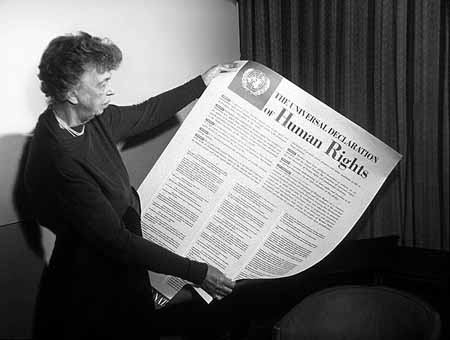
On my view, human rights aren’t political conversation stoppers, they’re a prerequisite for certain kinds of political conversations at all. Indeed, human rights are so foundational to certain kinds of political conversations that many people lay claim to them even where they don’t exist so as to begin or continue a difficult political conversation.
The Donatists judged that reunion with the Catholics would entail a new domination by the crumbling Roman Empire. They refused to forgive, refused to share authority and a political world with Roman agents who claimed to want only peace but had historically engaged in political domination in the region. The question that Augustine’s letters present is this: could they forgo ‘sharing authority’ while preserving the charitable affect of dwelling in a shared world? Generally speaking charity does not demand agreement or the fusion of horizons, certainly not in the face of an unforgiveable scandal.
As I see it, the limit of forgiveness is not within our voluntary power, an act of will, but rather in developing the capacity to imagine the act that we are trying to forgive. Thus the skandalon of forgiveness is an imaginative challenge, we stumble over it when acts are unimaginable, and we overleap it when our imagination succeeds. We make these imagined acts meaningful for others through poiesis: we create a world of meaning in which they are imaginable by marking exemplars, noting commonalities, and creating spaces of remembrance. The product of our work thus makes these meaningless deaths and thought-defying atrocities meaningful and thinkable. If you think about it from the perspective of un-consolable resentment, this is a crime akin to justification or exoneration.
After the families of the victims of the Emanuel AME church shooting unilaterally forgave the shooter , I’ve been thinking again about forgiveness. (Some previous posts here .) In particular, I am wondering again about the relationship between theological and political forgiveness. The classic Enlightenment description of the duty to forgive is derived from the…
I am one of those ideologically-impure liberals that worries a lot about public sector unions. On the one hand, I favor workplace democracy and collaboration; on the other hand, I worry about the fact that as union membership has declined, the majority of remaining union members haved tended to be at the top of the…
In responding to my post on the topic, Peter Levine says of “public philosophy” that I am not yet sure what it means or whether I want to be part of it. To me, that is a major indictment. He then goes on to give a useful account of “public scholarship” that we can take as…
Because of my work on Hannah Arendt, I often struggle with the apparent incongruity between her account of natality and my own tendency towards antinatalism . Natality is at the heart of Arendt’s project, a rejection of the Heideggerian obsession with mortality and being-towards-death: “It is in the nature of beginning that something new is…
From Understanding Arguments by Walter Sinnott-Armstrong and Robert Fogelin, which I use in my critical thinking course: Ideologies and worldviews tend to be self-sealing. The Marxist ideology sometimes has this quality. If you fail to see the truth of the Marxist ideology, that just shows that your social consciousness has not been raised. The very…
Part 1: Forgiveness and the Problem of Irreversibility Part 2: Forgiveness as a Manifestation of Divine Charity Part 3: A Duty to Forgive? Part 4: Prejudice as the Crystallization of Judgments Part 5: Charity as a Flight from Politics Part 6: Publicity without Politics Arendt’s response raises interesting questions: “Of course I am prejudiced, namely against charity,” she wrote. In her letter…
A candidate trying to decide between graduate schools recently asked me which “types of public administration, political, or civic problems you are attempting to provide solutions to with your research? For example, which questions are you tackling right now?” Of course, right now I’m grading. But in a slightly more general sense of “right now,”…
Working in the Arendt archives this week, I came across this draft of a letter of Hannah Arendt’s, responding the poet Auden’s essay on Falstaff and his criticisms of certain aspects of her account of forgiveness in The Human Condition: Dear Wystan Auden – I just read the Falstaff piece — had some trouble getting…
I’ve been distracted by travel… first I went to the Arendt Circle in Louisvlle, Kentucky, then to Pennsylvania where I selected a site for my wedding! I volunteered to become the Arendt Circle’s webmaster, which means my online time will be further divided between setting up a website for them, my time on metafilter, and…
Crooked Timber challenges us to discover the best first paragraphs of academic texts . They provide this example: “Affluence breeds impatience and impatience undermines well-being. This is the core of my argument. For detail and evidence, go directly to the chapters; for implications, to the conclusion, which also has chapter summaries.” (Avner Offer, The Challenge…
“We must… build our political philosophy anew starting from the one and only figure of the refugee.” (Giorgio Agamben) If the nation-state is in decline, it is principally because the nation-form, that coalition of fellow natives born of common blood and soil has given way to the denizen-foreigner: the resident-alien who through dint of illegal…
I’ve been having an ongoing conversation with a number of people about the supposed ‘plight’ of the well-educated white male. We’ve been searching for the non-existential root causes to the alienation that many left-leaning white men experience in US culture, especially the academy. The idea is that, while we are all human and troubled by…