Today I’ll be addressing a group of imprisoned students, university administrators, and prison officials to inaugurate the University of Baltimore’s partnership with the US Department of Education and Jessup Correctional Institution to offer Bachelor’s Degrees. We have a few tasks today, including inspiring the students and encouraging the officials that their support for the program…
Many of my own fellow-travelers police progressivism in a way I sometimes find frustrating. It is de rigeur to chastise neoliberals and technocratic moderates for their lack of radicality. My work tends towards the technocratic/participatory divide around how policies should be made, and so I often don’t have strong policy preferences unless I’ve researched a…
While to many people the reformer and the abolitionist are indistinguishably radical, there is a disheartening tendency for reformers and abolitionists to fight rhetorical battles about the strategies and ends of the movement. Thus we are riven by rhetoric. To the abolitionist, this is because reform tends to reassert the status quo after superficial changes: the risks of complicity are real. To the reformer, though, this is unfortunate, because we could be more effective in solidarity.
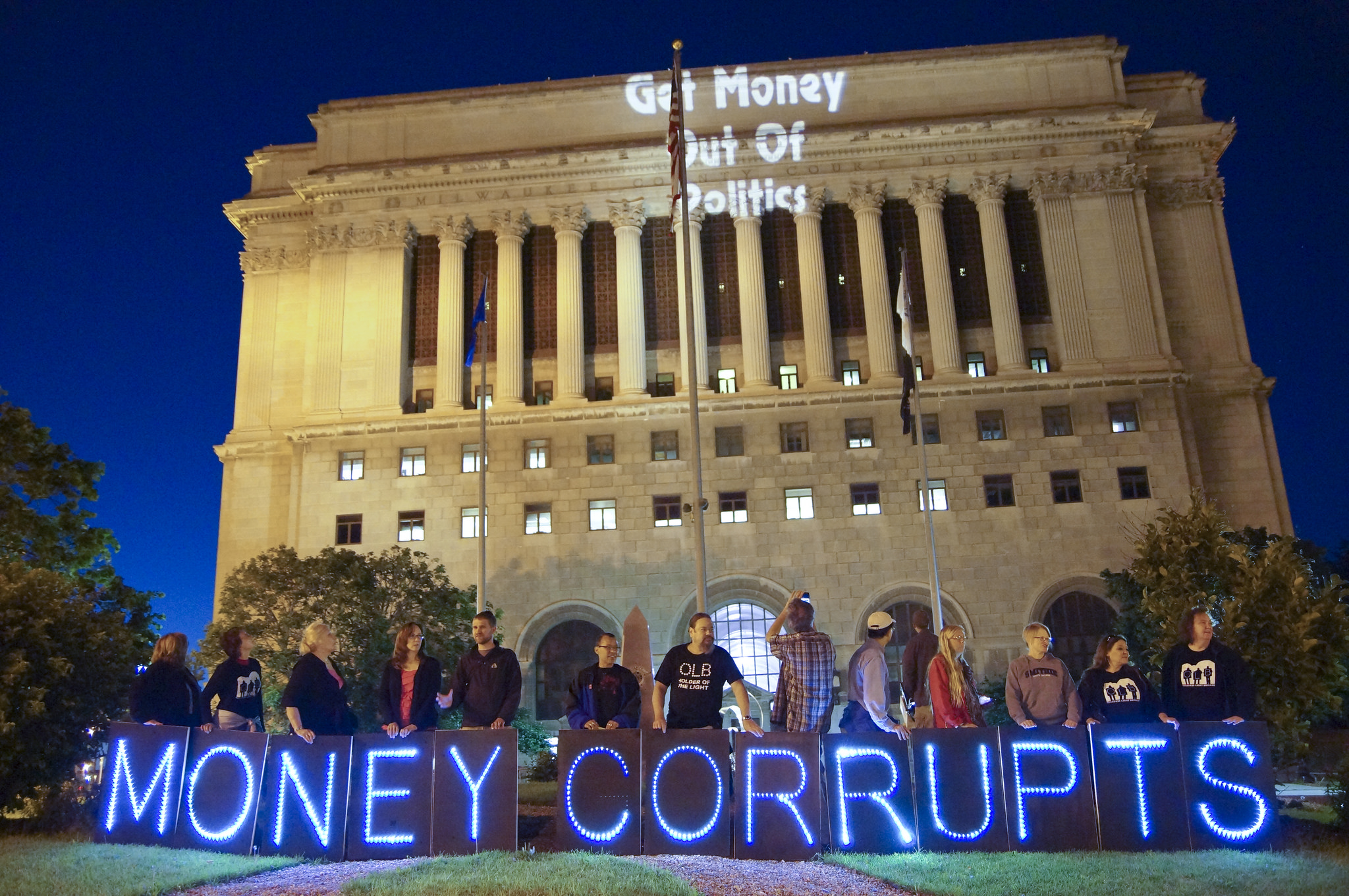
[caption id=”attachment_4024″ align=”alignright” width=”300″] “Get Money Out of Politics” by Flickr user Light Brigading[/caption] Some things live forever in social media. In my circles, one article that comes up all the time is the Gilens and Page study of legislative influence that is often interpreted this way: ” US No Longer an Actual Democracy “…
Wonkblog does a roundup: “Whoever it is that keeps insisting their preferred policies are panaceas has a lot of explaining to do.” No mention of civic engagement, the basic income guarantee or prison abolition, so I guess they’re still in the running.
[caption id=”attachment_3215″ align=”alignright” width=”224″] by flickr user ChrisM70[/caption] I’ve just finished an article on higher education and the liberal arts, and it’s full of hope and comes to some definite conclusions about particular ways that an education in the liberal arts is valuable. It’s out for peer review right now, which means that if the…
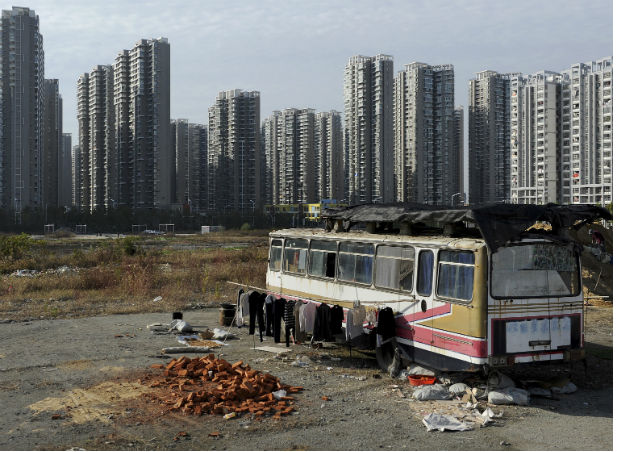
I can think of at least six kinds of inequality: [caption id=”attachment_3117″ align=”alignright” width=”300″] Hefei, Anhui province in China (Photo by Jianan Lu.)[/caption] Inequality of income: different people receive different wages, either for different jobs or for the same job, as profits from capital investments, or as government subsidies, transfer payments, or private charity. Inequality…
At the beginning of the twentieth century, there was a broad consensus among reformers in the United States regarding the perniciousness of economic monopolies and winner-take-all politics. After that period of rampant growth and cronyism known as the Gilded Age, groups who had been disproportionately disadvantaged by political patronage and voter fraud began to organize…
Deirdre McCloskey describes her project : I have been trying for thirty years to revive the rhetorical tradition, and lately to introduce language into the economists’ models in which talk is cheap and therefore of no consequence. On the contrary, sweet talk, persuasion, is one quarter of national income, earned by managers and teachers,…
Another way of putting this question is: how does your ideology and social setting blind you? One way to answer is to look at those beliefs that you have the most incentive to deceive yourself about. What are your biases? For instance, I’m probably not as smart or as caring as I think I am, because…
I am one of those ideologically-impure liberals that worries a lot about public sector unions. On the one hand, I favor workplace democracy and collaboration; on the other hand, I worry about the fact that as union membership has declined, the majority of remaining union members haved tended to be at the top of the…
Megan McArdle’s Newsweek cover story, ” Is college a lousy investment? ” is an odd beast. Parts of it are really great, and there are some very important observations throughout to which my colleagues and fellow progressives should pay attention. But the title, framing, graphics, and many of the arguments are just silly, which makes…
From Foucault’s Collège de France lecture on March 14th, 1979 (in what the publisher has misnamed The Birth of Biopolitics despite the fact that that year’s lectures basically spelled the end of Foucault’s work on biopolitics and focused on the limitation of state control over the market): What does it mean to form human capital,…
The Obama administration brews its own beer Weigel takes a stab at serious policy Weigel has predicated a lot on the conditional statement: “If you look at it right, then you’ll see serious policy.” But we don’t have any evidence for the antecedent, that the public or the media *will* “look at it right.” More to…
It is my considered opinion that the next three months will involve no serious deliberations regarding substantive public policy. Though readership and viewership for such matters will be at its highest, none of the things discussed will be discussed in a way that comports with public reason or with anything like the goal of exchanging…
John Quiggin raises some interesting questions about the BIG+VAT in the comments to the last post: I’m unconvinced by your transition strategy, though of course the nature of a transition strategy depends on the starting point. I don’t see how a ‘small’ [UBI*], say $3000/person/r or $1 trillion per year in the US context let’s…
I think about inequality a lot. But I also think about the middle class a lot, which isn’t quite the same thing. Generally, my sympathies lie with the “least advantaged” or “subaltern,” but I also feel the pull of the American cultural commitment to the middle class. There can be little doubt that we are…
[caption id=”” align=”alignleft” width=”336″] US Customs and Border Protection officers enforce our labor market protections with paramilitary techniques.[/caption] One of my favorite liberal policies is the basic income proposal. The idea is that all citizens have a basic guaranteed income, below which no one may fall. As the argument goes, this supplies more flexibility than…
Last week, Greg Mankiw posted this graph without comment: I thought there was something weird about the graph, and it’s been nagging at me. For one thing, it compares the bottom four quintiles to the top 5 percent of Americans. For another, it ignores non-federal taxation. (State and local taxes are more difficult to calculate,…