In my last post before the election, I quibbled with Peter Levine’s strategic argument that Trump’s supporters might be momentarily richer than average, but only because they were older, maler, and whiter. I worried that it was a kind of mistake, even if it’s perhaps an analytic effort designed to enhance our ability and willingness to achieve…
[caption id=”” align=”aligncenter” width=”373″] This happens a lot in philosophy.[/caption] Update: As Scu points out, sharing this opens me up to the scrollover text (which doesn’t show on hotlink): “‘But you’re using that same tactic to try to feel superior to me, too!’ ‘Sorry, that accusation expires after one use per conversation.’”
While to many people the reformer and the abolitionist are indistinguishably radical, there is a disheartening tendency for reformers and abolitionists to fight rhetorical battles about the strategies and ends of the movement. Thus we are riven by rhetoric. To the abolitionist, this is because reform tends to reassert the status quo after superficial changes: the risks of complicity are real. To the reformer, though, this is unfortunate, because we could be more effective in solidarity.
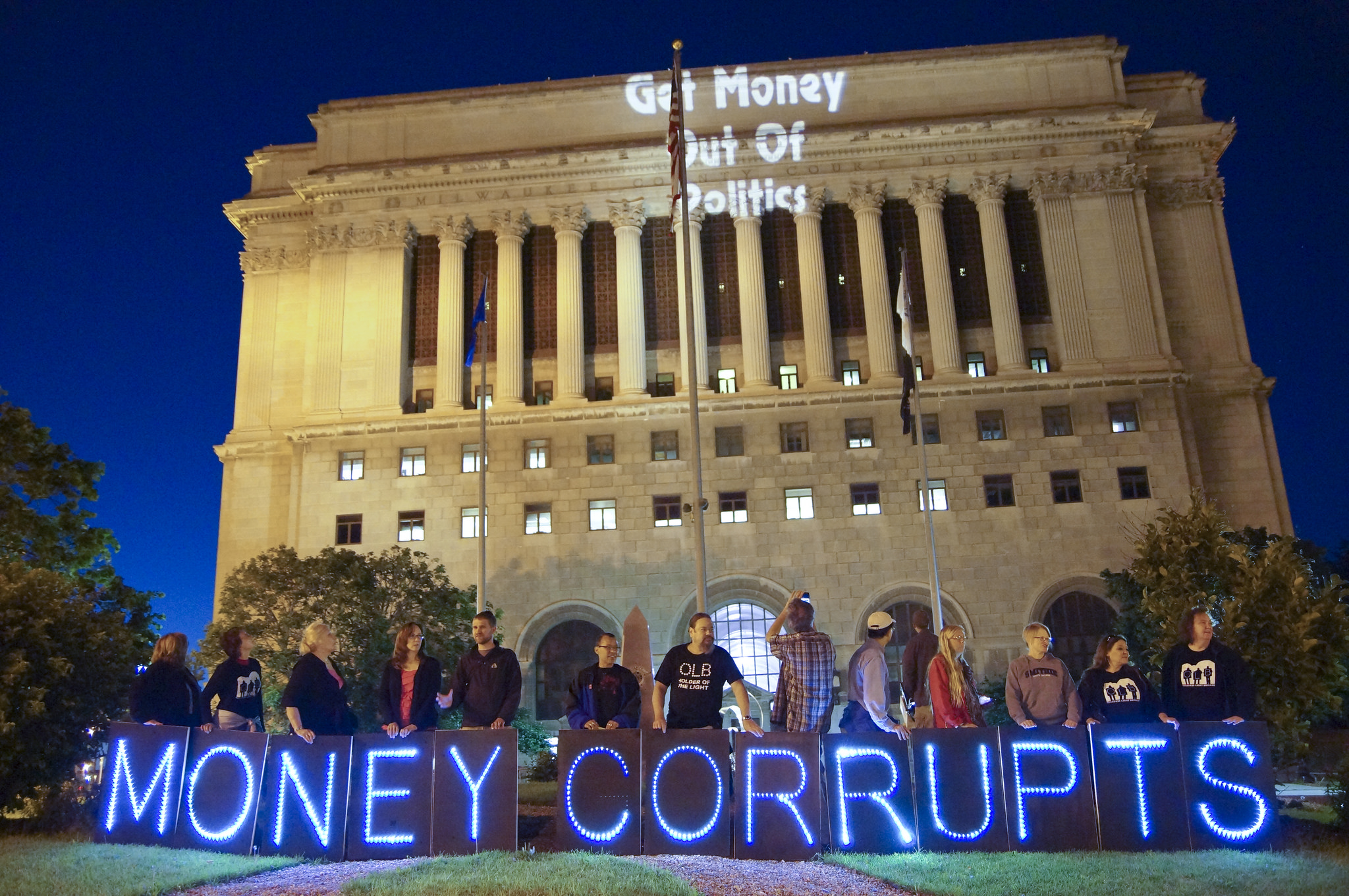
[caption id=”attachment_4024″ align=”alignright” width=”300″] “Get Money Out of Politics” by Flickr user Light Brigading[/caption] Some things live forever in social media. In my circles, one article that comes up all the time is the Gilens and Page study of legislative influence that is often interpreted this way: ” US No Longer an Actual Democracy “…
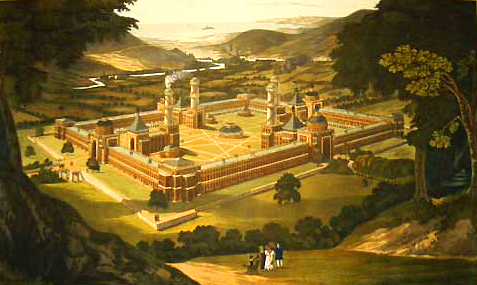
Recently I’ve been thinking about a book by Erin McKenna which I read as an undergraduate: The Task of Utopia: A Pragmatist and Feminist Perspective . I read it then because it promised to bridge the divide between my favorite genre, science-fiction, and my interest in philosophy. But the book profoundly changed me, and I’m…
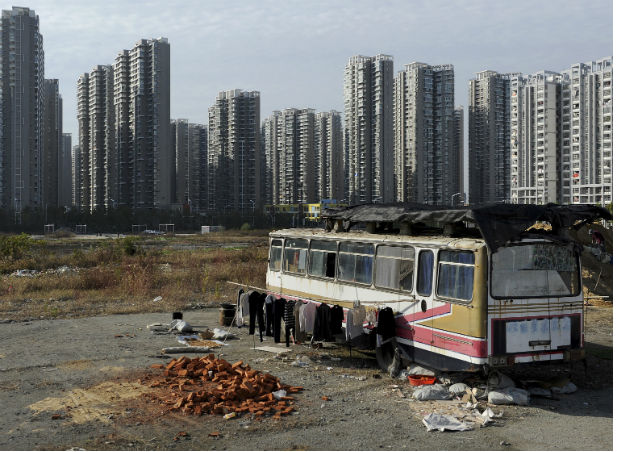
I can think of at least six kinds of inequality: [caption id=”attachment_3117″ align=”alignright” width=”300″] Hefei, Anhui province in China (Photo by Jianan Lu.)[/caption] Inequality of income: different people receive different wages, either for different jobs or for the same job, as profits from capital investments, or as government subsidies, transfer payments, or private charity. Inequality…
Peter Levine has been blogging on various aspects of truth recently: democracy in a “post-truth era ,” issues in prediction , and now a piece on scientism : if all truths were scientific truths, we would be in deep trouble. We would then reject any claims that science cannot support. For example, do all human beings have…
Another way of putting this question is: how does your ideology and social setting blind you? One way to answer is to look at those beliefs that you have the most incentive to deceive yourself about. What are your biases? For instance, I’m probably not as smart or as caring as I think I am, because…
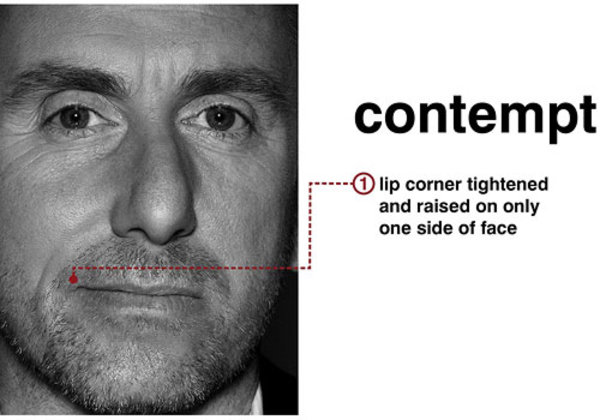
I haven’t written much about status emotions , recently, but I came across one of my favorite Facebook memes and remembered again how central it seems. I don’t endorse the misogyny here, but it perfectly describes the way that fundamental attribution bias transforms resentment into contempt, and thus leads, in my view, to both epistemic…
My department invited Sharon Meagher to do a seminar last Friday on how to redirect our energies towards “public philosophy.” Meagher has a great textbook for introducing philosophy through an exploration of urban issues that offers a situated approach to philosophical inquiry, and she’s done a lot of work trying to organize and advocate for…
In his initial response to the the Crooked Timber bloggers , Cowen also suggests that he doesn’t like the “mood affiliation” of the CT bloggers: I am not comfortable with the mood affiliation of the piece. How about a simple mention of the massive magnitude of employee theft in the United States, perhaps in the…
[This is an uncorrected transcription of some remarks Hannah Arendt gave to the first annual Conference on the Cybercultural Revolution. I’ve copied it from the Library of Congress, here . Notice that her concerns with the end of work are quite strong in these remarks. Her comments on the necessity of a social safety net in…
Metafilter’s dgaicun shares this meta-analysis on regret, ” What we regret most… and why .” An excerpt: Education is the number one life regret, accounting for 32.2% of all reported regrets (SD = 1.89). This is a strikingly consistent finding, confirmed by a wide margin in all but two data sets (those exceptions being Landman et al.,…
Most academics know some version of the critique of elite rule, administrative power, and centralized regulation by experts. Hannah Arendt called bureaucracy the “rule of No Man;” Michel Foucault described the overlap of legislative power, knowledge-production, and the apparatus of discipline and control; Iris Marion Young defended simple street activism against the demand that political…
[caption id=”” align=”alignleft” width=”336″] US Customs and Border Protection officers enforce our labor market protections with paramilitary techniques.[/caption] One of my favorite liberal policies is the basic income proposal. The idea is that all citizens have a basic guaranteed income, below which no one may fall. As the argument goes, this supplies more flexibility than…
Following up on my claim in the last post that “honor produces error,” in my view, the problem is epistemic privilege, i.e. deference. By deference, I mean the epistemic privileges that some people receive or earn through demonstrating their erudition or looking like they know what they’re talking about. When you think of deference, you…
DIY U by Anya Kamenetz (2010) A regularly updated version of this guide can be found here. I teach at the third-most expensive school in the country, where I regularly persuade students that they should major or minor in philosophy. For many students, this is a value question, and as I like to put it,…
[caption id=”attachment_3357″ align=”alignright” width=”484″] “Hey, look at those assholes over there. Ordinary fuckin’ people. I hate ’em.” -Repo Man[/caption] In this post, I want to argue that disdain, contempt, and scorn have no moral place in our emotional lives. In short, my claim is that these emotions are immoral because they target persons and not…